
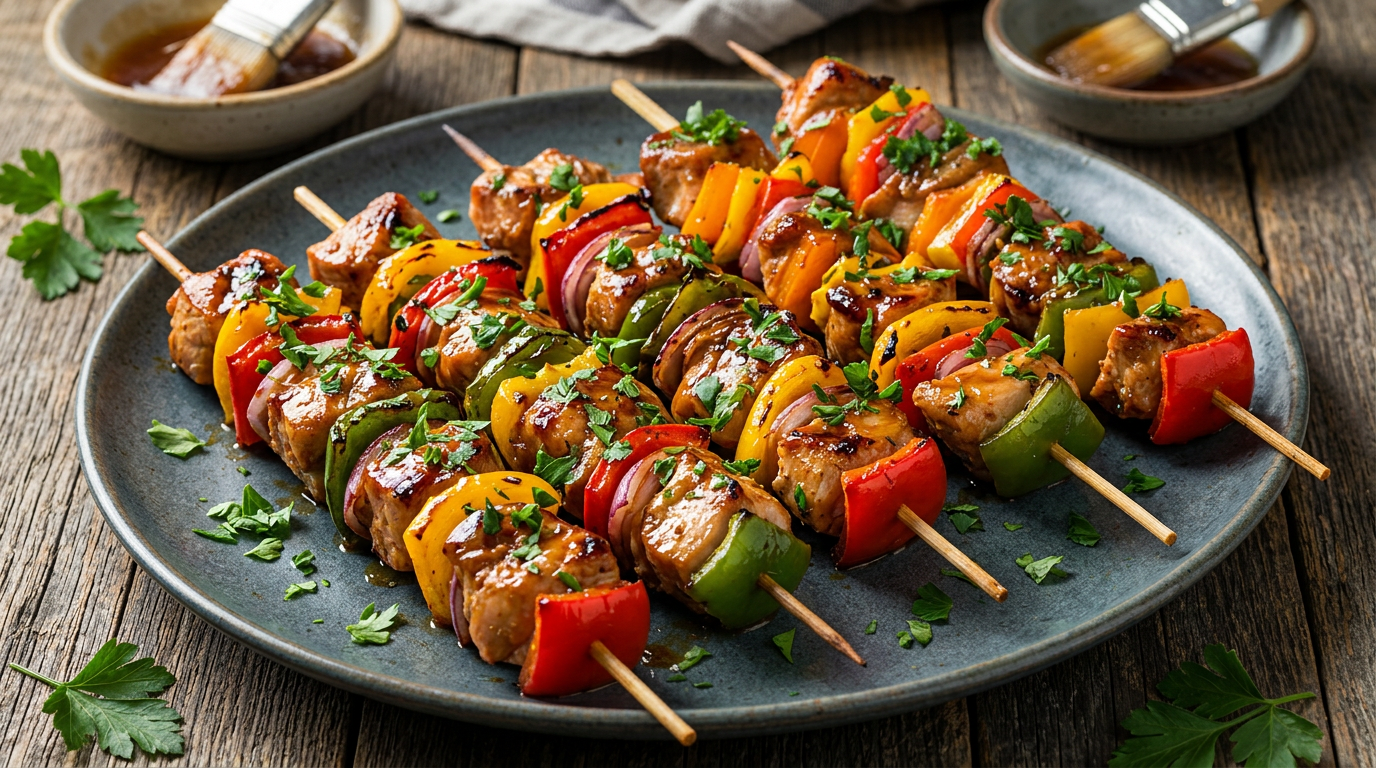
Honey Garlic Chicken Kabobs: The Ultimate Sweet and Savory Dinner
PrintHoney Garlic Chicken Kabobs (Grilled or Oven-Baked)
Juicy marinated chicken bites skewered with bell pepper and red onion in a sticky honey-soy-garlic glaze. Grill it or bake it on a sheet pan — finished with fresh parsley.
- Prep Time: 15 minutes
- Cook Time: Approximately 25 minutes
- Total Time: 1 hour marinate + 25 minutes cook time
- Yield: 4-6 servings
Ingredients
- 3 boneless, skinless chicken breasts or chicken thighs, cut into 1-inch bites
- 2 tablespoons oil (olive or vegetable)
- 1/3 c honey
- 1/3 c soy sauce
- 3 cloves minced garlic
- 2 bell peppers, cut into 1-inch pieces
- 1 red onion, cut into 1-inch pieces
- 1 teaspoon black pepper
- Fresh parsley, chopped (for garnish)
Instructions
- Make the marinade: In a large bowl, whisk together 2 tablespoons oil (olive or vegetable), honey, soy sauce, minced garlic, and black pepper until combined.
- Marinate the chicken: Add the 3 boneless, skinless chicken breasts, cut into 1-inch bites to the marinade and toss well to coat. Cover and refrigerate for at least 30 minutes (up to 4 hours for deeper flavor).
- Assemble the skewers: Thread the marinated chicken onto skewers, alternating with pieces of bell peppers, and red onion cut into 1-inch pieces. If using wooden skewers, soak them in water for 20 minutes first to prevent burning.
- Grill option: Preheat grill to medium-high heat. Grill skewers for approximately 25 minutes, turning occasionally, until chicken is charred in spots and cooked through (internal temp 165°F).
- Oven option: Preheat oven to 400°F. Arrange skewers on a lined sheet pan and bake for approximately 25 minutes, flipping halfway, until chicken is golden and cooked through (internal temp 165°F).
- Finish and serve: Remove from heat, sprinkle generously with 2 tablespoons fresh parsley, chopped (for garnish), and serve warm.
Notes
Chicken thighs work well and stay extra juicy. For a thicker glaze, reserve some marinade before adding raw chicken, then brush it on during the last few minutes of cooking (don’t reuse marinade that touched raw chicken without boiling it first).
There’s something undeniably satisfying about a well-made kabob. Maybe it’s the way the chicken chars just slightly at the edges while staying tender inside, or maybe it’s how a simple wooden skewer transforms an ordinary meal into something that feels like a backyard celebration. Whatever the reason, honey garlic chicken kabobs have earned their spot as one of the most requested weeknight dinners — and once you make them yourself, you’ll understand exactly why.
This recipe brings together a handful of pantry staples — honey, soy sauce, garlic, and a touch of oil — to create a marinade that does most of the flavor work for you. Add colorful bell peppers and red onion, thread everything onto skewers, and you’ve got a meal that looks like it took hours but comes together in well under an one hour, start to finish.
Why This Recipe Works So Well
The magic of honey garlic chicken kabobs lies in the balance of flavors. Honey brings natural sweetness and helps the marinade caramelize beautifully when exposed to heat, whether that’s from a grill or an oven. Soy sauce contributes salt and umami depth, rounding out the sweetness so the dish never tips into overly sugary territory. Garlic, meanwhile, adds a savory punch that ties everything together and gives the marinade its signature aromatic quality.
What really sets this recipe apart, though, is its adaptability. Not everyone has access to an outdoor grill, and not everyone wants to fire one up on a weeknight. That’s where the oven-baked option comes in — you get nearly identical results using a sheet pan and a hot oven, which means this recipe works year-round, regardless of season or setup.
The Role of Marination
Marinating chicken isn’t just about adding flavor — it’s about texture, too. When chicken sits in an acidic or enzyme-rich marinade (soy sauce contributes a bit of both), the proteins begin to break down slightly, resulting in a more tender bite once cooked. Even a short 30-minute marinade makes a noticeable difference, but if you have the time, letting the chicken sit for up to four hours allows the flavors to penetrate more deeply.
It’s worth noting that you don’t want to over-marinate delicate proteins like chicken breast for more than several hours, as the enzymes and acidity can eventually start to break down the texture too much, leading to a mushy result rather than a tender one. Four hours is a good upper limit for this particular marinade.
Choosing the Right Cut of Chicken
While chicken breast is a popular choice for kabobs because it’s lean and cooks quickly, chicken thighs are worth considering if you want an even juicier result. Thigh meat has a higher fat content, which makes it more forgiving if it cooks a touch longer than intended — a common scenario with kabobs, since vegetables and meat don’t always finish cooking at exactly the same rate.
If you do use chicken breast, cutting it into evenly sized pieces (roughly one-inch cubes) is key. Uniform pieces cook at the same rate, which prevents some pieces from drying out while others are still undercooked.
The Vegetables: More Than Just a Colorful Addition
Bell peppers and red onion aren’t just there to make the skewers look appealing, although they certainly do that. Both vegetables hold their shape well under high heat, developing a slight char while still maintaining a bit of crunch. This textural contrast — tender, juicy chicken against slightly crisp, caramelized vegetables — is part of what makes kabobs so satisfying to eat.
Feel free to experiment with other vegetables that hold up well to grilling or roasting, such as zucchini, mushrooms, cherry tomatoes, or even pineapple chunks for a touch of natural sweetness that pairs beautifully with the honey garlic glaze.
Grilling vs. Oven-Baking: Which Should You Choose?
Both methods produce delicious results, but they each bring something slightly different to the table.
Grilling imparts a smoky char that’s hard to replicate indoors. The direct heat of a grill also cooks the exterior of the chicken and vegetables quickly, locking in juices while creating those coveted grill marks. If you have access to an outdoor grill and the weather cooperates, this is a fantastic option for entertaining or simply enjoying a classic summer meal.
Oven-baking, on the other hand, offers convenience and consistency. Because the heat surrounds the kabobs evenly on all sides, you don’t have to worry about hot spots or flare-ups. It’s also a great option for anyone who doesn’t own a grill or wants to cook indoors during colder months. The sheet pan method also means easier cleanup, since everything is a contained on one surface.
Tips for Perfect Skewers Every Time
A few small details can make a big difference in how your kabobs turn out:
Soak wooden skewers first. If you’re using wooden or bamboo skewers, soak them in water for about 20 minutes before threading on your ingredients. This prevents them from burning or catching fire during cooking, whether on the grill or in the oven.
Don’t overcrowd the skewers. Leaving a small gap between each piece of chicken and vegetable allows heat to circulate more evenly, ensuring everything cooks through properly rather than steaming.
Cut ingredients to a similar size. As mentioned earlier, uniformity is key. This applies to your vegetables as well as your chicken — try to cut your bell peppers and onion into pieces roughly the same size as your chicken bites.
Let the kabobs rest briefly after cooking. Just a few minutes of resting time allows the juices within the chicken to redistribute, resulting in a more tender, flavorful bite.
Serving Suggestions
Honey garlic chicken kabobs are wonderfully versatile when it comes to serving. For a complete meal, pair them with a simple side of steamed or garlic butter rice, which soaks up any extra glaze beautifully. A light, crisp salad — think cucumber, tomato, and a simple vinaigrette — also complements the richness of the marinade nicely.
If you’re hosting a gathering, consider setting up a kabob bar where guests can pair their skewers with a variety of sides: warm pita bread, a cooling yogurt-based dip, or even a simple slaw for some added crunch. The kabobs themselves also make excellent leftovers, either eaten cold the next day or gently reheated.
Meal Prep and Storage Tips
This recipe is a fantastic candidate for meal prep. You can marinate the chicken up to a day in advance and store it in the refrigerator, ready to be threaded onto skewers whenever you’re ready to cook. Once cooked, leftover kabobs will keep in an airtight container in the refrigerator for three to four days.
For reheating, a quick trip in a covered skillet over medium heat helps retain moisture better than the microwave, which can sometimes dry out chicken. If you’d like to freeze portions for later, remove the chicken and vegetables from the skewers first, store them in a freezer-safe container, and use within two to three months for best quality.
A Few Flavor Variations to Try
Once you’ve mastered the base recipe, don’t be afraid to make it your own. A pinch of red pepper flakes or a small drizzle of sriracha in the marinade adds a pleasant kick for those who enjoy a bit of heat. A splash of rice vinegar or a squeeze of fresh lime juice can brighten the glaze with a touch of acidity. For a slightly different flavor profile, swapping the soy sauce for tamari makes this recipe gluten-free, while keeping all the savory depth intact.
Final Thoughts
Honey garlic chicken kabobs strike that rare balance of being simple enough for a weeknight dinner yet special enough to serve to guests. With a short ingredient list, a flexible cooking method, and endless opportunities for customization, this is a recipe worth keeping in regular rotation. Whether you’re grilling in the backyard or baking indoors on a sheet pan, the result is the same: juicy, flavorful chicken with a glossy, irresistible glaze.